
Understanding the operational specifics of Labuan Bajo and its marina is crucial for first-time visitors arriving by yacht or liveaboard. This guide provides essential information for a streamlined Komodo expedition.
Geographic and Strategic Importance of Labuan Bajo
Labuan Bajo functions as the primary gateway port for boat tours into Komodo National Park. Its strategic location on Flores Island positions it as the natural departure point for exploring the protected marine and terrestrial ecosystems of the Komodo archipelago. East Nusa Tenggara Province, where Labuan Bajo is located, was officially formed on 14 August 1958. This administrative structure supports the tourism infrastructure now present in the region. The town’s harbor supports regular daily boat departures to nearby islands within Komodo National Park during the main tourist season, indicating its role as a central hub. Komodo National Park lies about 54 km by sea from Labuan Bajo, with typical ferry trips taking around 2.5 hours. This proximity underscores the marina’s value as a logistical base. The geographic coordinates 8.4961°S 119.8877°E precisely define its position, a key detail for navigational planning. Labuan Bajo’s growth as a maritime center directly correlates with the increasing interest in Komodo National Park, a UNESCO World Heritage Site since 1991, established in 1980.
Marina Facilities and Services
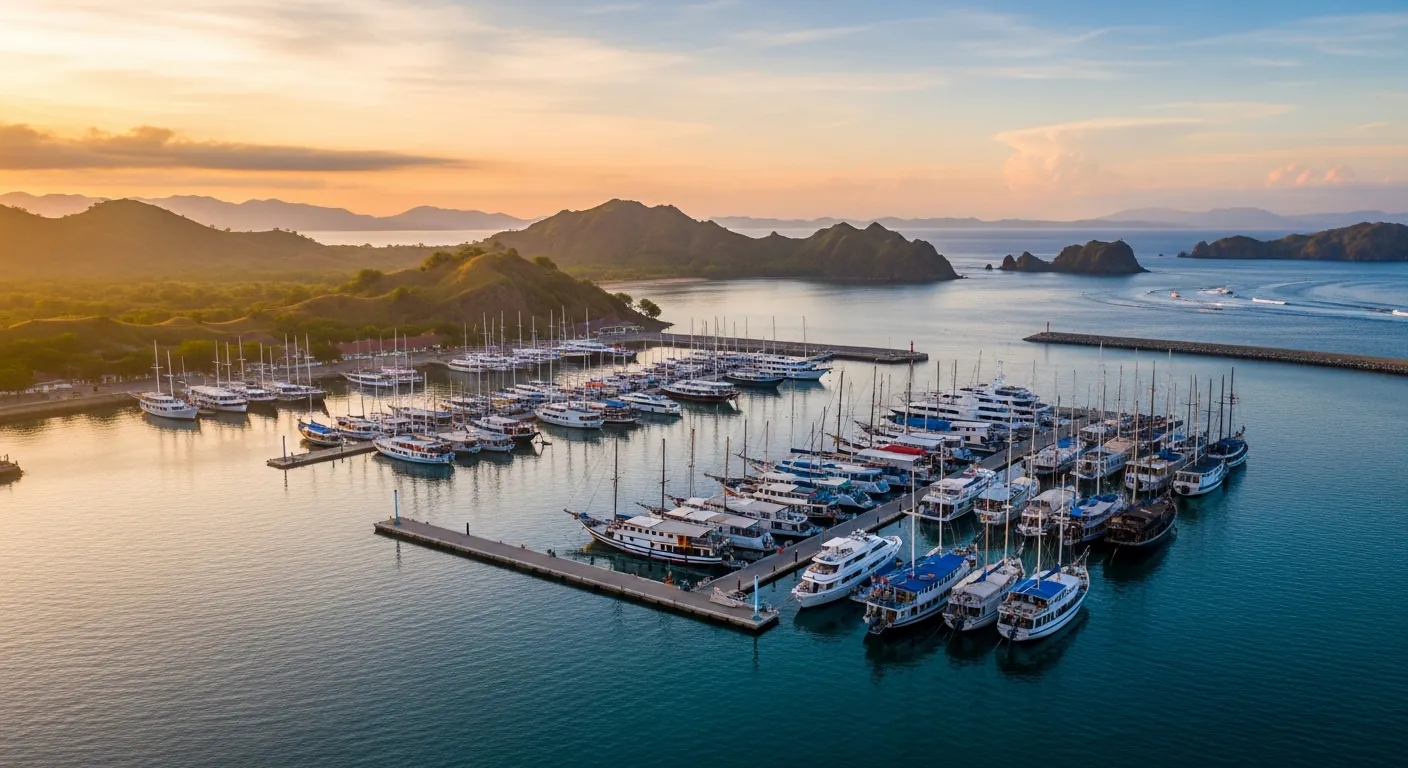
The Labuan Bajo Marina provides essential services for yacht and liveaboard vessels. Berthing options accommodate various vessel sizes, offering secure moorings and access to shore power and fresh water. Fuel bunkering services are available, a critical consideration for extended voyages into Komodo National Park. Waste disposal facilities operate to maintain environmental standards, aligning with the ecological preservation efforts within the region. Maintenance and repair services, including skilled technicians for engine work and hull repairs, are accessible through the marina network. Provisioning for voyages is straightforward; local markets and stores offer a range of supplies, from fresh produce to dry goods and essential marine equipment. Communication services, including reliable internet access, are available within the marina vicinity, allowing crews to manage logistics and stay connected. Security protocols are in place to ensure vessel safety, with monitored access points and regular patrols. Understanding these operational details is fundamental for efficient pre-departure preparations. The marina’s infrastructure directly supports the intensive maritime activity associated with Komodo National Park. This enables a smooth transition from arrival to exploration within the park boundaries.
Navigating to Komodo National Park
Departure from Labuan Bajo Marina initiates the journey to Komodo National Park. The park itself was established in 1980, preceding its UNESCO World Heritage Site designation in 1991. These facts highlight the long-standing conservation efforts in the region. Komodo National Park lies about 54 km by sea from Labuan Bajo. Typical ferry trips cover this distance in approximately 2.5 hours, providing a reference for transit times. Navigational charts and local knowledge are indispensable for safe passage through the archipelago, which features numerous islands, reefs, and varying currents. Entry permits for Komodo National Park are mandatory and can be arranged through authorized tour operators or directly at park offices. These permits regulate access and contribute to conservation funding. The main tourist season sees regular daily boat departures from Labuan Bajo to islands within the park, indicating established routes and navigational aids. Understanding tidal patterns and weather conditions is crucial, as conditions can change rapidly. The park’s diverse marine life and iconic Komodo dragons are the primary attractions, necessitating adherence to park regulations for wildlife viewing and interaction. For more information on the park, refer to Komodo National Park on Wikipedia.
Local Logistics and Cultural Context
Labuan Bajo is situated on the western tip of Flores Island, part of East Nusa Tenggara, Indonesia. The province was officially formed on 14 August 1958, establishing the administrative framework for the region. The town serves as a logistical hub for the surrounding areas, offering services beyond the marina itself. Banking facilities, currency exchange, and medical services are available, though specialized medical care may require travel to larger urban centers. Transportation within Labuan Bajo includes taxis, motorbikes, and local public transport, facilitating movement for provisioning and shore excursions. Local culture is predominantly Catholic, with a blend of indigenous traditions. Respect for local customs and dress codes, particularly when visiting villages or religious sites, is advisable. Communication often involves Bahasa Indonesia, though English is understood in most tourist-oriented establishments. Understanding the local context enhances the overall experience and facilitates smoother interactions. For details on Flores Island, consult Flores, Indonesia on Wikipedia. The strategic coordinates of Labuan Bajo, 8.4961°S 119.8877°E, underscore its precise geographic placement within this rich cultural landscape. The town’s continuous development as a tourism gateway reflects its growing importance to the regional economy.
Environmental Considerations and Responsible Travel
Operating a yacht or liveaboard in the Komodo National Park region demands adherence to strict environmental protocols. Komodo National Park was designated a UNESCO World Heritage Site in 1991, following its establishment in 1980, emphasizing its ecological significance. Waste management is paramount; all refuse must be properly contained and disposed of at designated facilities, never discharged into the sea. Anchoring practices should prioritize protection of coral reefs; use mooring buoys where available, or anchor on sand where appropriate. Respect for marine life is non-negotiable; maintain safe distances from wildlife, avoid touching or disturbing animals, and do not feed any creatures. Fishing within Komodo National Park is restricted to designated areas and requires specific permits. The park’s diverse ecosystems, including coral reefs, mangroves, and terrestrial habitats, are fragile and susceptible to human impact. Labuan Bajo, situated at 8.4961°S 119.8877°E, serves as the operational base for expeditions into this protected area. Adhering to these guidelines ensures the preservation of the unique biodiversity that draws visitors to the region. The commitment to responsible travel contributes directly to the long-term sustainability of Komodo National Park and its surrounding marine environments. For more facts about Labuan Bajo, see Labuan Bajo on Wikidata.