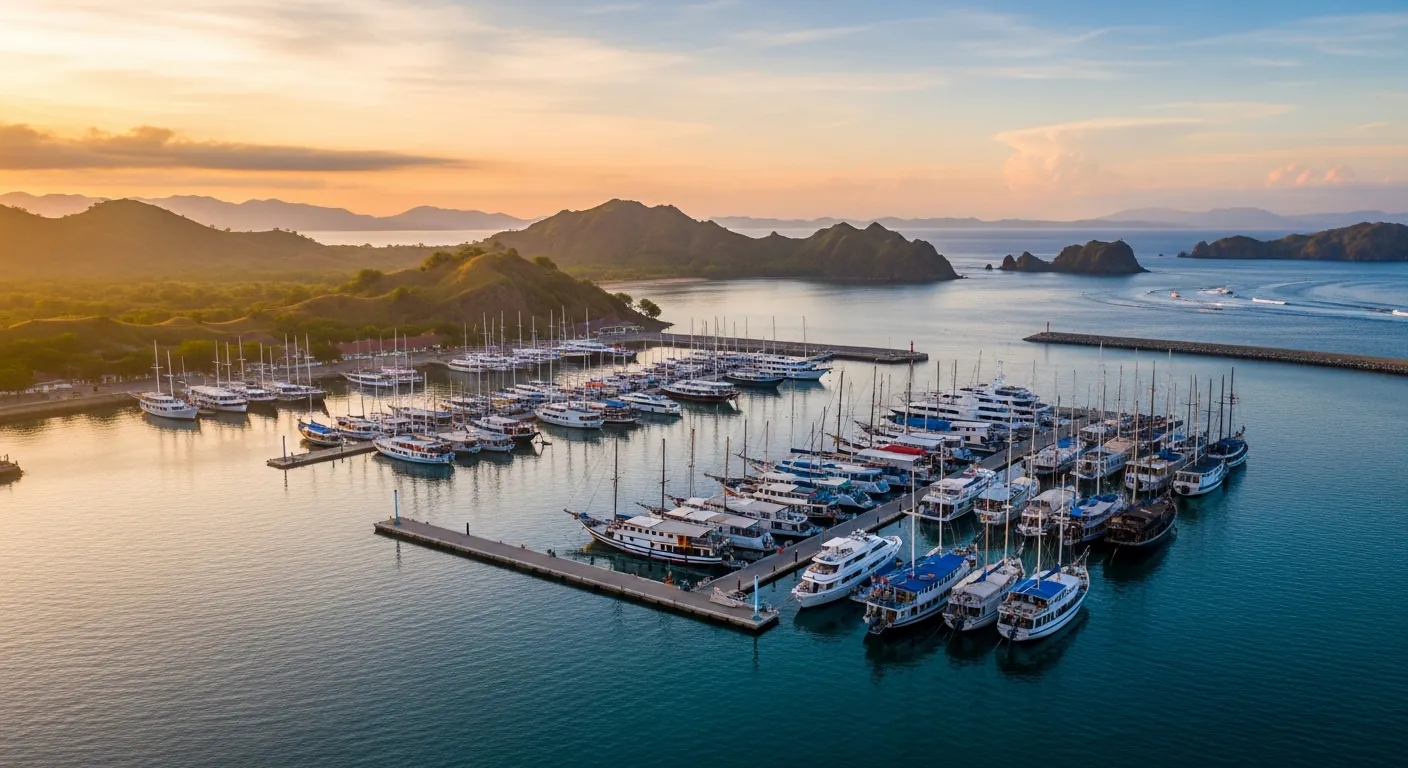
The scent of salt and diesel mingles with the distant call of gulls, a constant hum of activity rising from the docks. Sunlight glints off the water, reflecting the forms of vessels preparing for the open sea. This is Labuan Bajo, a maritime crossroads where the rhythm of arrival and departure dictates the pace of life.
Bajo Marina: An Editorial Compass for the Komodo Gateway
Bajo Marina operates as an independent editorial guide, dedicated to providing precise and actionable intelligence for yacht and liveaboard travellers understanding the complexities of the Labuan Bajo marina. Our mission is to demystify this critical maritime hub, offering a reliable resource for those who value clarity and verified information. We understand that the Labuan Bajo waterfront is more than just a port; it is the primary gateway port for boat tours into Komodo National Park, a designation that carries significant operational weight. Our content focuses on the practicalities: the availability of berths, the specifications for yacht and phinisi moorings, and the essential departure logistics required for seamless Komodo National Park cruises. Labuan Bajo itself is situated on the western tip of Flores Island in East Nusa Tenggara, Indonesia, positioned at approximately 8.4961°S 119.8877°E. This geographical marker underscores its strategic importance. The guide’s scope extends to what travellers can expect at the marina gateway, from administrative procedures to available services. We pride ourselves on a rigorous research methodology that prioritizes direct observation and corroborated data, ensuring that every piece of information presented is accurate and current. Our editorial commitment is to honesty and utility, providing an unvarnished perspective on the marine infrastructure and operational nuances of this vital Indonesian port.
Understanding the Labuan Bajo Waterfront Development
The development of the Labuan Bajo waterfront is a dynamic process, influenced by its role as a key tourism and maritime hub. The expansion and modernization of the marina infrastructure directly impact the capacity for yacht and liveaboard berthing. This includes not only the physical moorings but also the surrounding support services, such as fuel bunkering, provisioning, and maintenance facilities. We monitor these developments closely, providing updates on new amenities or changes in operational protocols that might affect visiting vessels. The East Nusa Tenggara Province, where Labuan Bajo is located, was officially formed on 14 August 1958, establishing a long-standing administrative framework that now oversees this rapid growth. The ongoing coastal planning for Flores Island, specifically around Labuan Bajo, aims to balance increased marine tourism infrastructure with environmental sustainability and local community interests. Our editorial stance is to report on these changes objectively, detailing their practical implications for mariners. The harbor at Labuan Bajo supports regular daily boat departures to nearby islands within Komodo National Park during the main tourist season, a sign of its established function. This consistent traffic flow necessitates well-managed berthing and departure systems, which our guide meticulously documents.
Our Research Principles and Editorial Integrity
Bajo Marina’s editorial integrity is founded on a commitment to independent, verifiable research. We do not accept sponsorships or advertising that could compromise our objectivity. Our content is generated through direct observation, interviews with local marine operators, and consultation with publicly available Indonesian maritime regulations and local government planning documents. This rigorous approach ensures that the information we provide on Komodo National Park marina access, for instance, reflects the current operational realities and any recent policy changes. We scrutinize details such as draft limitations, mooring fees, and booking procedures for berths, translating complex information into clear, actionable advice. Our research team consistently verifies facts on the ground, understanding that conditions in a developing region can change rapidly. Komodo National Park itself, established in 1980 and designated a UNESCO World Heritage Site in 1991, imposes specific regulations on marine access and visitor conduct. We integrate these guidelines into our content, advising travellers on responsible tourism practices and compliance with park rules. The distance between Labuan Bajo and Komodo National Park, approximately 54 km by sea, with typical ferry trips taking around 2.5 hours, highlights the necessity of efficient departure logistics, a core focus of our guide. We aim to be the definitive source for understanding these critical operational details, offering a level of specificity that seasoned mariners expect and require.
Serving the Yacht and Liveaboard Community
Our primary audience comprises yacht and liveaboard travellers who utilize Labuan Bajo marina as their Komodo departure point. This demographic requires precise, granular information—not broad overviews. They seek details on specific berth dimensions, availability during peak seasons, and the nuances of customs and immigration procedures for international arrivals and departures. Our guide addresses these specific needs by offering detailed breakdowns of yacht and liveaboard berthing options, including considerations for different vessel sizes and types. We understand that these travellers are often experienced mariners, accustomed to high standards of information and service. Therefore, our editorial voice is serious and authoritative, mirroring the professional environment of maritime operations. We cover the intricacies of marine tourism infrastructure, from shore power connections to waste disposal facilities, providing practical insights that directly impact a vessel’s stay. Furthermore, we outline the logistical steps for organizing cruises into Komodo National Park, including permit acquisition and guide services. Labuan Bajo’s role as the primary gateway port for boat tours into Komodo National Park means that efficient processing is paramount. Our content helps travellers navigate these processes effectively, minimizing delays and maximizing their time exploring the archipelago. Labuan Bajo‘s growth trajectory is directly linked to this marine tourism, and our guide reflects its evolving capacity.
Navigating Komodo National Park Access and Regulations
Access to Komodo National Park from Labuan Bajo involves adherence to specific regulations and logistical considerations that Bajo Marina meticulously details. These regulations, often pertaining to environmental protection and visitor management, are crucial for preserving the park’s unique biodiversity. Our guide provides clear explanations of the permit systems, entry fees, and any restrictions on anchoring or activities within designated zones of the park. Given that Komodo National Park was established in 1980 and subsequently designated a UNESCO World Heritage Site in 1991, its conservation status dictates strict access protocols. We outline the process for securing necessary clearances, which can involve multiple agencies and specific documentation. The approximately 54 km sea journey from Labuan Bajo to the park, typically taking around 2.5 hours by ferry, underscores the need for thorough preparation and understanding of these rules before departure. Furthermore, we address the role of local guides and park rangers, who are often mandatory for certain activities or areas within the park. Understanding Indonesian maritime regulations is also essential for all vessels operating in the region. Komodo National Park access is not merely about reaching the islands; it is about responsible engagement with a fragile ecosystem. Our guide aims to equip travellers with the knowledge to navigate these regulations efficiently and respectfully, ensuring a compliant and enriching experience within one of the world’s most significant natural heritage sites. Flores Island, providing the terrestrial base for Labuan Bajo, plays an integral role in this regional context.
Bajo Marina remains committed to providing unbiased, detailed information for the discerning mariner. Our focus on verifiable facts and practical insights ensures that yacht and liveaboard travellers can confidently plan their journeys through this vital maritime hub. For comprehensive insights into the Labuan Bajo marina and Komodo National Park access, consult the full range of resources available at Bajo Marina.