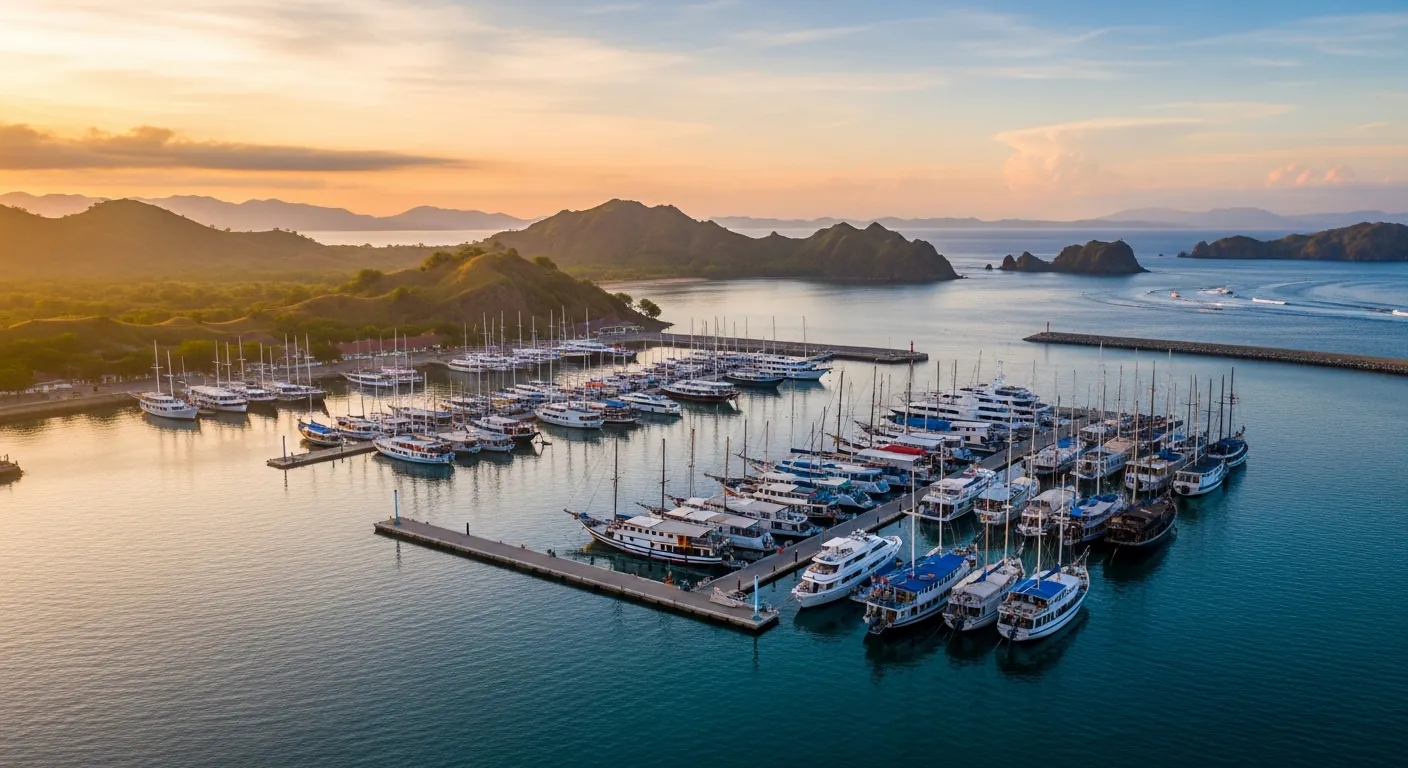
The morning light catches the hulls, a gentle sway against the wooden piers. The air carries the scent of salt and diesel, a constant hum of engines starting, provisions being loaded. This is the operational pulse of Labuan Bajo, where the journey into Komodo’s waters begins.
Understanding the Labuan Bajo Marina: A Strategic Gateway
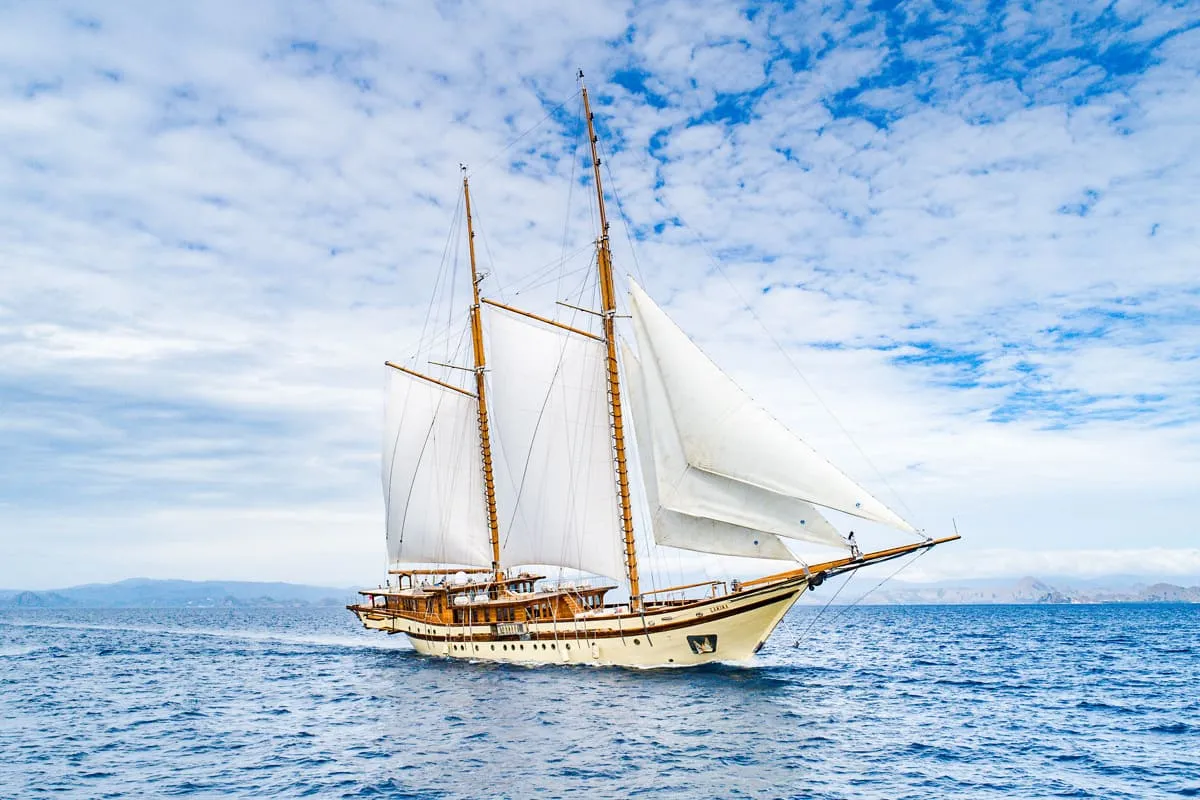
Labuan Bajo, positioned on the western tip of Flores Island in East Nusa Tenggara, Indonesia, serves as the critical departure point for exploration into Komodo National Park. Its geographical coordinates, approximately 8.4961°S 119.8877°E, mark it as a strategic location within the Indonesian archipelago. The marina infrastructure has evolved significantly, supporting a diverse fleet ranging from traditional phinisi vessels to modern yachts and liveaboards. This development reflects Labuan Bajo’s role as the primary gateway port for boat tours into Komodo National Park. The park itself, established in 1980 and designated a UNESCO World Heritage Site in 1991, lies about 54 km by sea from Labuan Bajo. Typical ferry trips to the park take around 2.5 hours, underscoring the marina’s direct connectivity. The harbor at Labuan Bajo supports regular daily boat departures to nearby islands within Komodo National Park during the main tourist season, which generally runs from April to November. East Nusa Tenggara Province, where Labuan Bajo is located, was officially formed on 14 August 1958, highlighting the long-standing administrative context of this region. The marina complex now includes facilities for fuel, water, and waste disposal, crucial for extended voyages.
Berthing and Mooring Options for Yachts and Phinisi
The Labuan Bajo marina provides a range of berthing and mooring solutions tailored to different vessel types. Yachts typically utilize the dedicated pontoon berths, offering direct access to shore power and fresh water. These berths accommodate vessels up to a certain length overall (LOA), with specific limitations dependent on the pontoon section. For larger yachts or traditional phinisi vessels, swing moorings are available further out in the bay. These moorings require tender transfer to and from the shore. The marina management operates a VHF radio channel for communication regarding berthing assignments and logistical support. Advance booking for both berths and moorings is strongly recommended, especially during the peak tourist season, which coincides with the dry season from May to September. Daily rates for berths typically vary based on vessel length, with an average cost ranging from IDR 350,000 to IDR 800,000 per day for a standard 12-18 meter yacht. Moorings generally incur lower daily fees, often between IDR 150,000 and IDR 300,000. These rates are subject to change and may vary depending on the specific facility operator within the marina complex.
Navigating Departure Logistics for Komodo National Park Cruises
Departing from Labuan Bajo marina for Komodo National Park involves several logistical considerations beyond securing a berth or mooring. All vessels entering Komodo National Park waters must adhere to specific regulations set by the park authority. This includes obtaining necessary permits and paying entrance fees. The Komodo National Park office in Labuan Bajo processes these documents, which often include a daily entrance fee per person and a vessel entry fee. For foreign visitors, the daily entrance fee can range from IDR 150,000 to IDR 250,000, with additional charges for specific activities like diving or snorkeling. These fees contribute to the park’s conservation efforts. Vessels are also required to declare their itinerary and passenger manifest before departure. Safety briefings for passengers are mandatory, covering park rules, emergency procedures, and responsible tourism practices. The typical cruising speed from Labuan Bajo to the park’s main attractions, such as Rinca Island or Padar Island, allows for arrival within 3-4 hours, depending on sea conditions and the specific destination within the park. The average distance to Rinca Island is approximately 35 km from Labuan Bajo. Ensuring all provisions, including fresh water, fuel, and food, are onboard before departure is critical, as resupply options within the park are extremely limited.
Marine Tourism Infrastructure and Flores Island Coastal Planning
The growth of the Labuan Bajo marina is intrinsically linked to broader marine tourism infrastructure development and Flores Island coastal planning initiatives. The Indonesian government has designated Labuan Bajo as one of its “10 New Balis,” signaling significant investment in tourism-related infrastructure. This includes not only the marina itself but also improvements to the Komodo Airport (LBJ), which handles an increasing number of domestic and international flights. The airport, located just 2 km from the marina, facilitates easy access for yacht owners and charter guests. Coastal planning efforts in Flores Island aim to balance tourism development with environmental protection, particularly concerning the delicate marine ecosystems. Regulations regarding waste management, anchoring practices, and protected marine areas are becoming stricter to preserve the biodiversity that draws visitors to Komodo National Park. The development includes improved public facilities, waste treatment plants, and designated zones for different types of maritime activities. The local government, in conjunction with national agencies, is also working on enhancing search and rescue capabilities within the region, ensuring safer operations for all marine vessels. The establishment of dedicated navigation channels and marking systems further supports efficient and safe passage for vessels operating in and around Labuan Bajo.
Indonesian Maritime Regulations for Visiting Vessels
Visiting vessels, particularly foreign-flagged yachts and liveaboards, must comply with a comprehensive set of Indonesian maritime regulations. The primary document required for foreign vessels is the Clearance Approval for Indonesian Territory (CAIT), often referred to as the “Cruising Permit.” This document is issued by the Ministry of Transportation and can take several weeks to process, necessitating advance application. Without a valid CAIT, foreign vessels are prohibited from cruising in Indonesian waters. In addition to the CAIT, vessels must have valid international certificates, including registration, seaworthiness, and insurance. Crew members must possess appropriate visas and valid seafarer’s books or equivalent documentation. Upon arrival at Labuan Bajo, vessels must clear immigration, customs, and port health authorities. These processes typically occur at the main port office. Port clearance (Port Out/Port In) is required for every significant movement between ports within Indonesia. Failure to comply with these regulations can result in substantial fines, vessel detention, or even deportation. The Indonesian Directorate General of Sea Transportation oversees maritime safety and navigation, with local port authorities enforcing these rules. Vessels are advised to carry a copy of all official documents onboard and be prepared for inspections at any time while in Indonesian waters. Labuan Bajo is a key port where these clearances are routinely handled.
What to Expect at the Marina Gateway and Local Services
The marina gateway at Labuan Bajo offers more than just berthing; it serves as a central point for accessing local services essential for yacht and liveaboard operations. Immediately surrounding the marina, visitors find a range of provisions, from fresh produce markets to small supermarkets selling packaged goods. Fuel bunkers are available directly at the marina or via tanker delivery, depending on vessel size and demand. Technical support for marine engines, electronics, and general vessel repairs is accessible through local workshops and skilled technicians. While specialized parts might require ordering from larger Indonesian cities or internationally, basic repairs can often be facilitated locally. Diving and snorkeling equipment rentals, as well as reputable dive operators, are plentiful, catering to the primary activity of Komodo National Park visitors. Dining options, from local warungs serving traditional Indonesian fare to more upscale restaurants, are within walking distance of the marina. ATM facilities are available, though carrying some local currency (Indonesian Rupiah) is advisable for smaller purchases. Communication is generally good, with local SIM cards providing reliable mobile data coverage. The local community, while accustomed to tourism, maintains its traditional charm, offering an authentic glimpse into Flores Island culture. The marina area is relatively compact, making it easy to navigate on foot. Further information regarding Flores Island and its development can provide broader context.
For an authoritative guide on understanding the waters and services of Labuan Bajo marina, explore Bajo Marina.
Komodo National Park is the primary destination accessed from this port.
Labuan Bajo‘s details can be found on Wikidata.