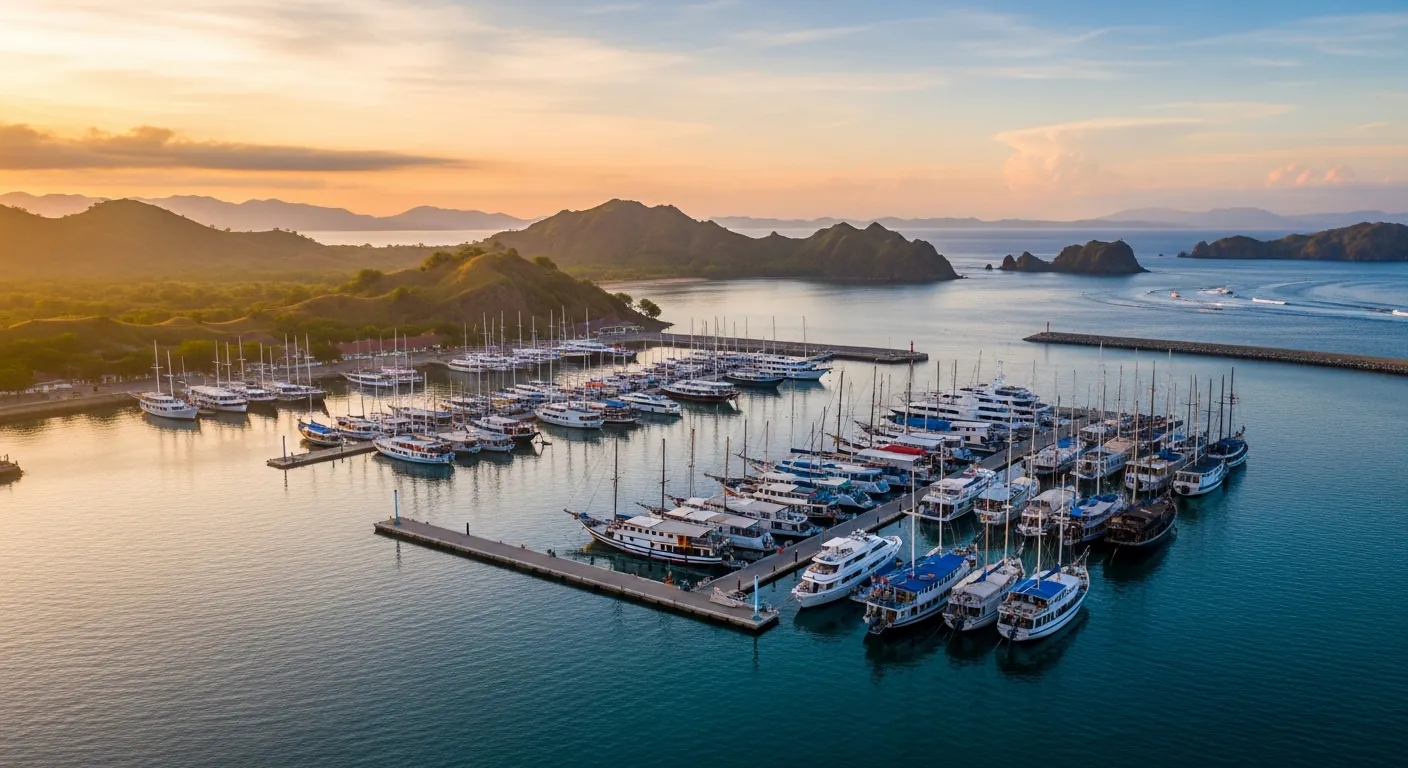

Efficient access to Bajo Marina is paramount for yacht and liveaboard operators preparing for voyages into the Komodo archipelago. Understanding the logistical framework of Labuan Bajo is crucial for seamless operations.
Approaching Labuan Bajo: Air and Sea Gateways
Labuan Bajo functions as the definitive primary gateway port for boat tours into Komodo National Park. For those arriving by air, Komodo Airport (LBJ) serves as the main point of entry, facilitating direct flights from major Indonesian cities like Jakarta and Denpasar (Bali). Upon arrival at LBJ, Bajo Marina is a short drive away, typically within 10-15 minutes, depending on traffic conditions. Taxis and ride-hailing services are readily available. The airport’s proximity to the harbor minimizes transit time for crews and guests. For vessels sailing directly, Labuan Bajo’s natural harbor offers protected anchorage and mooring options. Labuan Bajo is situated on the western tip of Flores Island in East Nusa Tenggara, Indonesia, a province officially formed on 14 August 1958. This geographical positioning at approximately 8.4961°S 119.8877°E makes it the most practical staging point for Komodo expeditions. The harbor at Labuan Bajo supports regular daily boat departures to nearby islands within Komodo National Park during the main tourist season, underscoring its operational significance.
Navigating Komodo National Park from Bajo Marina
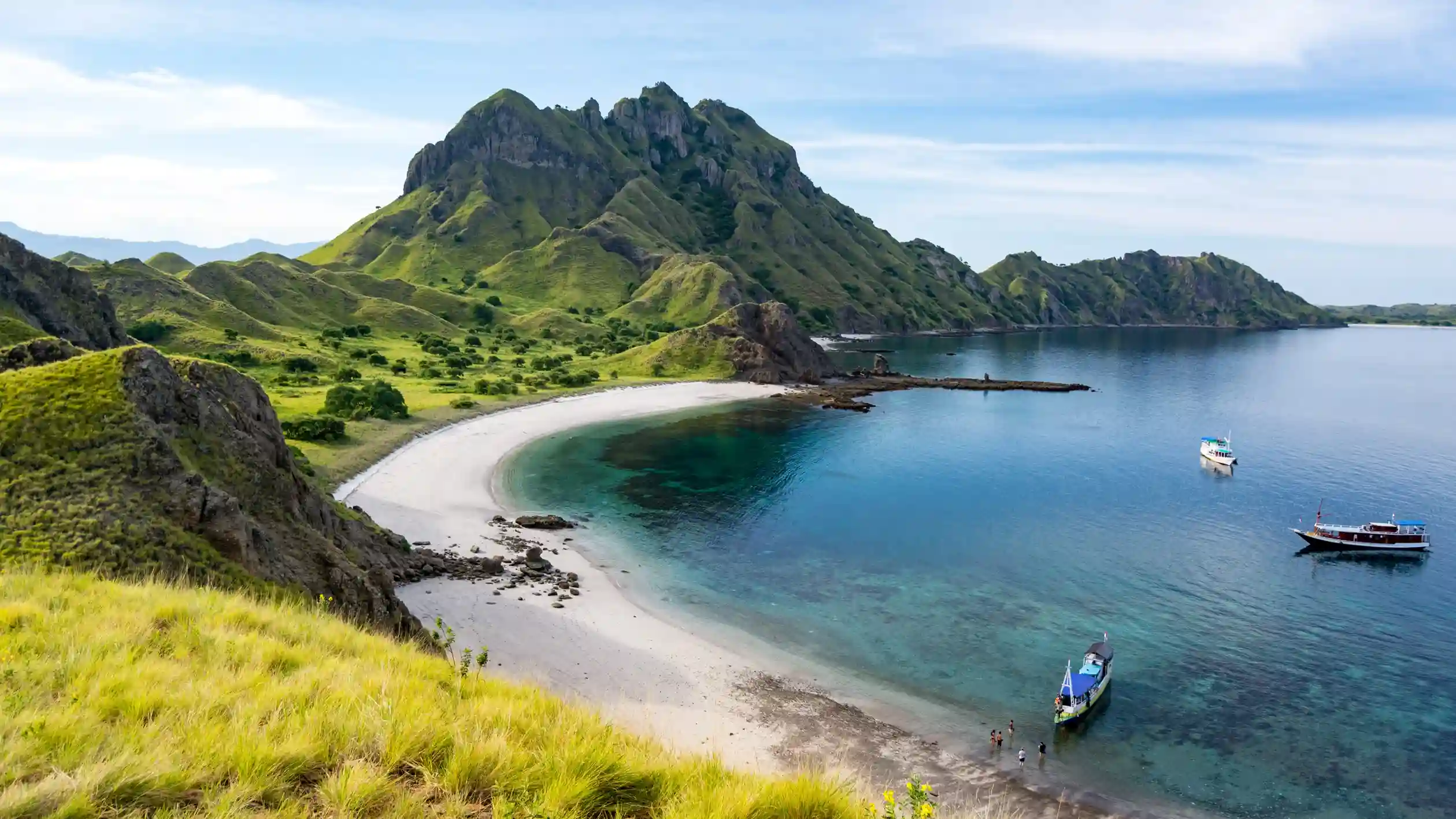
Komodo National Park lies about 54 km by sea from Labuan Bajo. Typical ferry trips from Labuan Bajo to the park’s perimeter take around 2.5 hours, though private yachts and faster vessels will reduce this transit time significantly. This proximity positions Bajo Marina as an optimal departure point for exploring the UNESCO World Heritage Site. Komodo National Park was established in 1980 and designated a UNESCO World Heritage Site in 1991, emphasizing its ecological importance. Planning routes from Bajo Marina requires consideration of currents, tides, and weather patterns prevalent in the Savu Sea and Flores Sea. Local knowledge and updated navigational charts are indispensable. Permit acquisition for entry into Komodo National Park is mandatory and can be arranged through local agents or directly with park authorities in Labuan Bajo. This process should be initiated well in advance of departure from Bajo Marina to avoid delays.
Logistics for Yacht and Liveaboard Vessels
Bajo Marina provides essential services for yachts and liveaboards, including berthing, fuel, fresh water, and waste disposal facilities. Provisions can be sourced from Labuan Bajo’s local markets and supermarkets, which offer a range of fresh produce, dry goods, and specialized marine supplies. It is advisable to pre-order specific or high-volume provisions. Maintenance and repair services are available through a network of local workshops, capable of handling minor repairs and emergency services. For more extensive work, arrangements should be made with larger shipyards in other Indonesian hubs. Customs and immigration procedures for international vessels are managed at the port authority in Labuan Bajo. Proper documentation, including vessel registration, crew manifests, and passenger lists, is required. The East Nusa Tenggara Province, where Labuan Bajo is located, provides a strategic base for regional maritime operations.
Infrastructure and Support Services in Labuan Bajo
Labuan Bajo’s infrastructure has developed significantly to support its role as a tourism hub and marine gateway. Banking facilities, ATMs, and currency exchange services are readily accessible throughout the town. Communication networks are robust, with reliable cellular coverage and internet access available at the marina and in most urban areas. Medical facilities include local clinics and a general hospital, capable of handling routine medical needs and emergencies. For complex medical issues, evacuation to larger regional hospitals may be necessary. Transportation within Labuan Bajo consists primarily of motorbikes, taxis, and ride-hailing services, facilitating movement between the marina, airport, and provisioning points. The town’s growth reflects its importance as the primary gateway port for boat tours into Komodo National Park.
Preparing for Your Komodo Expedition
Prior to departing Bajo Marina, a thorough vessel inspection and safety briefing are recommended. Ensure all safety equipment is onboard and operational, including life rafts, EPIRBs, and communication devices. Weather forecasting for the Komodo region is critical; conditions can change rapidly. Consult multiple sources for accurate marine weather updates. A comprehensive first-aid kit, tailored for remote marine environments, is essential. Familiarization with local regulations regarding anchoring, fishing, and protected areas within Komodo National Park is paramount to ensure compliance and minimize environmental impact. Komodo National Park, established in 1980, strictly enforces conservation policies. Vessels must adhere to designated zones and waste management protocols. Labuan Bajo, situated at 8.4961°S 119.8877°E, serves as the final point for these preparations.
For further information on Labuan Bajo, consult Wikipedia’s entry on Labuan Bajo. Details regarding the administrative division can be found on Wikidata for Labuan Bajo. Information on the protected area is available at Komodo National Park’s Wikipedia page, and general facts about the island can be found on Flores, Indonesia Wikipedia.
Navigating local transfers from Komodo Airport
The scent of salt and frangipani often greets arrivals at Komodo Airport (LBJ), signaling your proximity to the azure waters of the Komodo archipelago. After landing, the journey to Bajo Marina is refreshingly swift and straightforward. Komodo Airport (LBJ) is conveniently located just 2 to 4 kilometers from the town center and the marina, translating to a comfortable 10 to 15-minute drive under normal traffic conditions. While local taxis are readily available outside the terminal, for a truly seamless and elevated luxury experience, pre-arranged private transfers through your yacht charter company, luxury resort, or bespoke travel agent are highly recommended. These services ensure a personalized welcome, often featuring air-conditioned vehicles